Showing posts with label nonprofit. Show all posts

Saturday, March 21, 2015

PHPG would like to extend their deepest gratitude to the BFA Fairfax NHS group! Last night they raised $320.00 for PHPG at the fun and amazingly tasty St. Patrick's Day Valentine's Day Pancake Supper!


The menu was delicious! 3 Types of pancakes, GREEN eggs, sausage, fruit, the one and only really amazing VT pure maple syrup, juices, coffee and smiles! :D


This group did a wonderful job. Thanks so much you guys!


$320 dollars is enough to fund two new microloans in Nicaragua. This will allow two new families to begin their journey out of poverty. Your efforts are greatly appreciated!

Thursday, October 17, 2013

San Juanillo

This post is written by PHPG's Matagalpa region volunteer, Ross Harding.

San Juanillo is a small rural community a couple of hours away from Matagalpa by bus.


Although the journey can feel rather long, the natural beauty of Nicaragua at least makes for a pleasant view from the bus window.


San Juanillo is one of PHPG’s longer partnerships in the Matagalpa region. Our project here is part of our partnership with EOS International, which we also talked a bit about in an earlier post.

In the communities where we have partnered with EOS, generally our loans take the form of sustainable technologies such as fuel-efficient ovens or drip-irrigation systems. We also give a bit of capital, around $55, to help jump-start their business activities. With the help of PHPG and EOS, the communities we work with are able to secure livelihoods that they would have a hard time achieving otherwise.

So, how are things coming along? Regional Coordinator Eric and yours truly recently visited the community for one of our monthly collection dates.


Arriving at the local group leader’s farm, I couldn’t help but gawk at much of the picturesque beauty. Yet it is important not to romanticize things too greatly; our mandate is working with people who make on average less than $2 per day, which means despite the natural splendour of the land there is still real hardship. 

Thankfully, so far our efforts have contributed to lessening that hardship for the group we’ve been working with. Although there have been months here and there when one of the members might not be able to make the repayment (which is to be expected given the uncertainties of agricultural work), it’s certainly not a pattern. The San Juanillo group is leveraging the opportunity we at PHPG and EOS have been able to provide, and are well underway to paying it off completely. 


The group leader was happy to show us around her farm. Here’s what a plot of onions looked like in September:


And here they are in October:


So, in short, things are looking pretty healthy over in San Juanillo! We’ll definitely give another update on how things are going in this neck of the woods next month. It may be a bit of a trek to get to San Juanillo, but the gracious people, beautiful landscapes, and meaningful opportunities are certainly all worth it.

Wednesday, October 16, 2013

Business Workshops in El Pantanal

This post is written by Trent Shelton, PHPG's Program Coordinator in the Granada region.

Bernie teaches 35 PHPG clients about basic accounting principles as part of our Microfinance Plus program
PHPG’s core function is to give microloans ranging from $120 to $280 to local entrepreneurs in Nicaragua. However, just as important as giving a loan is providing an opportunity to develop business skills and business education. This is often called Microfinance Plus.

In the month of October, we have a volunteer by the name of Bernie Ringer-Britz. Bernie has an incredible background with a wealth of business consulting experience. His knowledge and desire to help others has been extremely helpful for our clients and other community members. He has sat down with numerous clients to review their business one-on-one. He has given clients many new ideas for their businesses as well as giving a fresh look at their operations.


This past Sunday evening, we invited our entire group loan clients in El Pantanal to a taller, a business workshop. With a good turnout of 35 clients, we handed out a simple accounting sheet for the entrepreneurs to track their inventory, calculate their net income, and to figure out their margins for each product. The clients were very interested in the sheet and were excited to learn how to use it.

Possibly the biggest difficulty was the wide range of age and education levels within our clients. The age of the attendees ranged from 18 years old to 75 years old. Education levels range from elementary school to possibly having studied in college for a few years. Teaching to 35 students with this big of a range proved difficult; but after splitting into smaller groups, our clients walked away with an understanding of how to do basic accounting for their respective businesses and were ready to put these into action. In the future, we will be visiting each loan group individually to reinforce the concepts and to ensure everything is going smoothly with the accounting sheets.

Thursday, October 3, 2013

Black Bean Project in Muy Muy

This post is written by Eric Pires, PHPG's Program Coordinator in the Matagalpa region.


Eric Pires, Matagalpa Program Coordinator, explaining the PHPG loan process to the Muy Muy clients

Matagalpa is a unique region of Nicaragua. The regional economy is heavily dependent upon the agricultural industry. The backbone of said economy is based around a variety of cash crops such as coffee and cacao. We have been identifying agricultural opportunities that capitalize on farmers’ capabilities as growers. Our most recent project has been through a partnership with a cooperative of fifty farmers and beekeepers in Muy Muy, Matagalpa. After discussing our financing opportunities, they approached PHPG with a project proposal. The cooperative has been seeking sources of credit to grow black beans. The local market for such beans is quite small as consumers in the region prefer red beans. That being said, the export market for black beans means that farmers could fetch a far higher price for their beans. As it so happens there is another cooperative in the region purchasing bulk amounts of black beans from farmers to export to Venezuela.

What PHPG has done is facilitate the meetings between the grower and buyer cooperatives leading to a purchase order for beans at a guaranteed price for our clients. The price may rise leading to even better prices but at the price we have negotiated they are guaranteed to triple their return on the initial investment. As soon as the contracts were signed, PHPG released the loan capital to the grower cooperative for them to buy bean seeds and begin upon this initiative. A portion of the loan capital has also been used to buy fertilizer and other agricultural inputs the farmers will need.

The Muy Muy loan clients enjoying a break in the PHPG presentation

We are also taking this opportunity to pilot a Microfinance Plus project. This project goes beyond offering loans to clients by also offering capacity building workshops. Together with the members of the cooperative, we have identified a series of workshop subjects ranging from sexual hygiene, water conservation and basic business marketing. We are contracting a group of experts in the region to design and implement the workshops on a monthly basis in collaboration with our clients. As well as improving their quality of life, we are hoping that through the workshops our clients will be able to develop innovative business ideas and opportunities they would like to pursue with future loans.

This project has been able to come together with the help of several other organizations operating in the region. ODESAR has been facilitating our meetings with the grower’s cooperative in Muy Muy. The Pulsera Project has supported us and contributed greatly to the financing of this project. They have been fundamental to PHPG’s ability to grow into new sectors and explore new initiatives in Nicaragua. Check back soon as we add more information on the progress with our Black Bean Project in Muy Muy.

Muy Muy loan client showing off his newly purchased black bean seeds

Wednesday, October 2, 2013

PHPG Expansion in San Juan de Oriente

This post is written by Trent Shelton, PHPG's Program Coordinator in the Granada region.

The San Juan de Oriente new loan clients along with the PHPG team

Twelve miles west of Granada, in the Masaya province, lays a town called San Juan de Oriente. As you work your way up from the lowlands of Granada, you start to feel the temperatures drops and the pace of life become a bit slower. From the main highway passing by, you’d never know what San Juan de Oriente offers. The town’s economy is based on the production of ceramics. It is said that 80% of the town population are involved in ceramics. The ceramics created here in this humble town are internationally famous. This is with good reason, as the ceramics are incredible pieces of art. The world-class artists send their products all over the world and even host a few competitions in their town that draw wide attention.

One may wonder why this town of 5,000 inhabitants is specialized in ceramics and so good at what they do. In the 1970s, several international organizations made a big push to revive the traditional craft. Ceramic specialists from North America, Europe, and Cuba, came to San Juan de Oriente to train the locals on the art. The excited community had a great feeling about the future of ceramics and what it may bring to the local economy. For many, it has done wonders for their financial situation. Others are still struggling due to the relatively small market in Nicaragua.

Ceramics created by San Juan de Oriente artisan, Jacobo

PHPG has now entered into a new partnership with Esperanza en Accion, a fair-trade non-profit organization specializing in Nicaraguan ceramics and crafts. With the partnership, PHPG has given one group loan consisting of six artisans who also work with Esperanza en Accion. Each of the artisans creates ceramics, and each will use their loans in a similar manner. Financially, the artisans have difficulties in buying the light blue color of paint that is used. This color, celeste, is only produced in the US and is then exported, making it very expensive. Making the cost even higher is the fact that there is only one place in San Juan de Oriente that sells this type of paint. Putting the cash upfront to purchase this paint can be extremely challenging for a local artisan. With PHPG’s loan, each of the six loan clients will have the ability to make this purchase to continue using the beautiful light blue color in their crafts. We’re looking forward to working more with Esperanza and Accion and ceramic artisans in San Juan de Oriente!

Saturday, August 3, 2013

The Pulsera Project Loans in Action

This post is written by Trent Shelton, PHPG's Program Coordinator in the Granada region.

A month ago, we distributed 10 loans to members of the Pulsera Project cooperative. In the past 30 days, each client has had the chance to invest the loan into their own business. Ranging from businesses of buying and selling cheese to repairing and selling cell phones, the young adults are now in action with their own businesses. Here are highlights of a few of the businesses.

Pollera

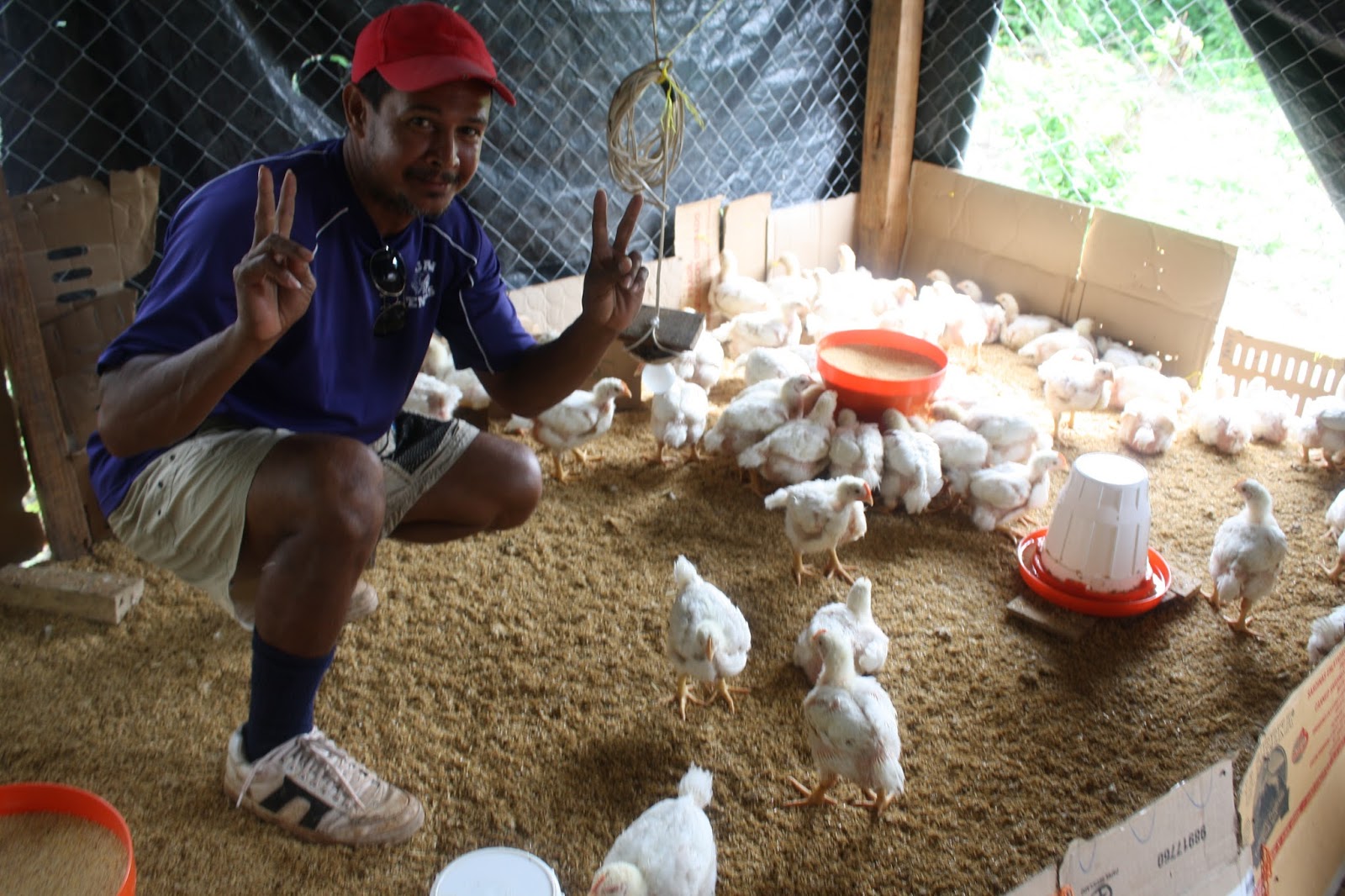
Yelma, one of the Pulsera Project’s long time coop members, has always wanted to start his own business of raising chickens. However, the high start-up cost was always the main obstacle. Owning a small piece of land on the outskirts of Granada, he was prepared to make his dream come true. With the help of the loan provided by the partnership between the Pulsera Project and PHPG, Yelma has put his business plan into action.

Yelma has constructed a chicken coup equipped with all the necessities. During the day, he makes sure someone is there to take care of the operation, usually himself or a member of his family. To start, 102 chicks were purchased. After raising the chickens to maturity, he will sell them at the local market to earn his profit. Afterwards, more chicks will then be purchased to restart the cycle. Over time, Yelma plans to reinvest his profits to expand the size of his chicken coup in order to raise more chickens and to continually increase his earnings.

Yelma's Chicken Coup

PHPG's Juan Carlos, taking the opportunity to check out the chicken coup

Yelma has purchased 102 chicks which will eventually be sold in the local market


Hamaqueros

Made up of Ernesto, Rommel, Adolfo, and Geovanny, the loan group called the Hamaqueros specialize in the production of hand-made hammocks. Each member was given a loan of about $200, which was used by each of them to invest in their own hammock workshop, tools, and materials. The high-quality hammocks are sold in the Pulsera Project store in Granada. Each hammock takes about 8 hours to make.

Ernesto using his newly purchased hammock workshop

Adolfo preparing his materials

Rommel takes a break from making a hammock to create one of his popular bracelets

Thursday, January 24, 2013

January 2013 Update on Nicaragua Happenings

Wow...where do we start? Things have been really hectic with end-of-year fundraising, but we had another great New Years Eve event in Richmond, VA and received tons of generous donations to our holiday drive. Thanks to all of you who donated!

Damaris & Regional Coordinator, Chris Fay,
in front of Damaris' brand-new fuel-efficient oven
While Isabel and I were working state-side on the fundraising, our three Regional Coordinators, Lana, Kyle, and Chris have been doing all sorts of good work in Nicaragua.

Lana and Kyle have been tag-teaming our larger base of operations in the areas surrounding the colonial city of Granada. They both bring strong skills to the table, and they both have hit the ground rolling. Lana joined us in December right before the holidays (which as she found out is an incredibly impossible time to get things done, but they're fun nonetheless), and Kyle arrived in Granada a couple of weeks ago.

They've been visiting all of our communities and soaking up all there is to know about PHPG's presence there. They've been working with our Nica employees, Manuel, Juan Carlos, and Tatiana, to come up with ways to improve our current systems and provide more services to our clients. They have some great cost-effective ideas about how we can provide more than just capital to our clients, which include business trainings and partnerships with other NGOs. We'll keep you updated about their progress as they continue their good work over the next few months.

After observing and training with us for a few weeks in Granada, we sent Chris up to northern Nicaragua to head up a couple of projects there. He's been working on tightening our connection with our clients in Piedras Coloradas and spearheading a partnership with a sustainable technologies organization, named EOS International.

Things are going quite well in Piedras despite a horrible growing season last fall. Our clients have replanted and maintained good repayments. With the coffee harvest in full swing, things should continue to get better. Chris will be interviewing potential clients over the next month or two in order to expand our services to others in the same region.

Lorenzo & Chris in front of the newly-installed
drip irrigation system in Soledad de Cruz
Our most exciting new project that Chris has been working on is a partnership with EOS International. Nine new clients from the town of Soledad de Cruz (in the department of Matagalpa) have had new fuel-efficient ovens or drip irrigation systems installed at their homes. These new technologies are being used to help our clients start or expand small businesses.

The way it works is that the clients receive the technologies upfront, along with some start-up capital (ranging from $50 to $65, depending on the technology). EOS is responsible for creating and installing the technology as well as following up with the clients to make sure it's fulfilling their needs. We are responsible for facilitating the lending and collection process. The technologies have been installed and the first month of collections went quite well.

All-in-all, things are going incredibly well right now. I can't wait to update you on the new projects that we're working on!

Thanks for reading,
Alex

Wednesday, December 28, 2011

Stories from the field: Jaquelina, the Queen of Cashews

Jaquelina Silva is a loan recipient of People Helping People Global. Jaquelina and her family of seven work in the cashew business. Each week they buy sacks of raw cashews to clean, prepare and sell. They are quite happy, because unlike most jobs in Nicaragua their earnings are reliable. A buyer from Costa Rica comes each Sunday to take away however many sacks of prepared cashews they were able to process and bag for that week.

Jaquelina took out a loan from PHPG in October of 2010 to improve her cashew business. One year later not only had she fully repaid her loan, but she had improved her business immensely. With more earned income, she now hires two of her neighbors to help her family with the labor-intensive cashew production. Jaquelina commented, "With more hands to shuck, clean, and toast the cashews, we are able to produce more cleaned cashews at a quicker rate."

On top of adding employees to her family cashew business, Jaquelina has also begun to replace her flimsy scrap metal walls with concrete. "It is a work in progress," she says, "as we continue to make more money from the cashew sales we will continue to improve our home."

PHPG is proud to work with amazing people like Jaquelina. She is both a strong business woman and an amazing role model for the entire community. Not only is she improving the lives of those in her family. She's employing others in her community and helping them improve their lives as well.

Tuesday, August 10, 2010

Micro-Lending Group Fights Poverty by Connecting Donors with Entrepreneurs Thousands of Miles Apart

Hey guys,

Below is a press release describing our new website features. Please let your friends know, and if you have any connections to media outlets, please forward them the information. Thanks much, and take care.

Alex

Micro-Lending Group Fights Poverty by Connecting Donors with Entrepreneurs Thousands of Miles Apart

Fairfax, VT, Tuesday, August 10, 2010 – People Helping People Global (PHPG) , a Vermont-based nonprofit, has just introduced a new website that will attempt to revolutionize philanthropy as we know it. This new website allows donors from all over the world to donate directly to entrepreneurs in Central America. “Instead of writing a check to a big nonprofit and hoping that your donor dollars make their way to the right place, we’ve set up a system that allows you to choose exactly where your hard-earned money is going,” said Alex Tuck, co-Founder and Executive Director of PHPG.
Informational meeting in Avelardo Enrique

The system is pretty simple.

A member of PHPG investigates which neighborhoods have the highest incidence of poverty while also having a high potential for success. “We like to work in neighborhoods where other nonprofits are also helping out. If education and infrastructure are being addressed by other organizations, then there’s less to distract us from business start-ups and job creation,” says Tuck.

PHPG then has meetings to inform the community about the micro-lending program and passes out applications to those who are interested.

All applications are reviewed, and each person that requests a loan is interviewed. The purpose of the interview is to meet the family, learn about their living situation, current income, educational background, and borrowing history. If the potential loan recipient falls under the lending guidelines of the organization, then he or she is added to the new website.

On the new website, donors may view pictures of the potential loan recipients and read their stories. If the donor would like to contribute to a particular entrepreneur, all he or she has to do is select the desired dollar amount and click donate. The system works just like any retail website. The donor just goes to his or her cart and checks out. After confirming the order, the donor is taken to the PayPal website where the donation is processed.

After PHPG receives the full donation amount, the organization disburses the money to the loan recipient. The loan recipient then pays back monthly payments on the loan over the agreed upon period. After the loan is repaid, the funds are used to facilitate new loans to other members of the community.

PHPG believes that they have a system that sets it apart from the organizations that currently exist in the micro-lending world. “Micro-lending started as a way for impoverished individuals to raise themselves out of poverty. Now, a lot of companies look at it as an easy way to make money. Unfortunately, it’s at the expense of the ultra-poor. Our goal at People Helping People Global is to put the philanthropy back into micro-finance,” said Tuck.

Another differentiating factor for PHPG is its size and intimacy. Isabel Gamm, co-Founder and Program Manager of PHPG, tells of her experience, “Community members trust our organization, because we interact with them regularly. In a community where we work, named Avelardo Enrique, we have meetings under the mango tree. During these meetings, we connect on a personal level. We talk about success stories and how to combat problems. We grumble over the heat. We discuss bookkeeping methods, where to buy the best nacatamales, and laugh as the falling mangos whiz by our faces. Our meetings are formal yet fun. That is what separates our organization other micro-lending groups.”

One of the biggest differences that PHPG has with other micro-lending groups is that it doesn’t charge interest. “We charge absolutely no interest on our loans, because we strongly believe that micro-loans requiring borrowers to pay high rates of interest often leave the borrower in more debt than when they began. Our goal is to raise communities out of poverty, not perpetuate the vicious cycle,” said Gamm.

The new website may be found at http://www.peoplehelpingpeopleglobal.org. There readers may learn more about the organization, try out the new donation system, and access the organization’s social media outlets.

About People Helping People Global

People Helping People Global is a project of Building New Hope, a registered 501(c)3 non-profit organization. It partners with locals in impoverished regions of the world to develop sustainable economic initiatives. It currently focuses on providing zero percent interest micro-loans to individuals living on less than two dollars per day.

Contact:

Alex Tuck
Executive Director
People Helping People Global
(804) 859-5597
alex@peoplehelpingpeopleglobal.org

# # #

Friday, March 26, 2010

A Trip out to Caña de Castilla


Being back in Granada for the past couple of weeks has been quite a great experience. Isabel and I have had the opportunity to reconnect with a lot of our old friends, and it feels like we never even left the place. Today, I just wanted to tell you about a couple of those old friends and a trip that we took out to their neighborhood a few days ago.

The little guy with me in the picture above is my younger, Nica brother, Jorge. Jorge and I lived in the same house for about three months during my last stay here in Nicaragua. He, Isabel, and I would make up games, watch Curious George, and fumble through elementary Spanish together (although I have to say that 3-year-old Jorge may have had a better grasp on Spanish grammar than myself, haha). Jorge is the son of Claudia, one of the maids that worked for the hospedaje where we last stayed, and one of the perks for them at the time was that they got to stay in the maid's quarters in the back of the house. The time that we got to spend with them, and Claudia's newborn, Mary Elena, was priceless. So, when we got back to Granada, one of the first few people that we had to visit was obviously Claudia and the crew.

We lucked out on Monday, because we ran into Claudia, and she just happened to be off the next day. So, Tuesday morning, we got the chance to head out to her house in Caña de Castilla, about a 10 minute bus ride to the southwest of Granada. This was our first trip out to her community, and we definitely didn't expect to see what we did.

The trip out to her place took just a little over an hour. During that time, we had the opportunity to describe to her what our organization does, and we got to learn a lot about her experience as a housekeeper at our old place. First of all, she gets paid less than $3 a day for anywhere between 10 to 14 hours of work. Some days she even has to come in at 4:30am to cook breakfast for a big tour group. It's great because these big groups usually leave a pretty hefty tip; however, despite this extra work, she never sees a dime of it. Secondly, she was allowed to stay at the house, but her kids were forever banned from staying there overnight.

Anyway, when we got out to her neighborhood, we were blown away by the beauty of the landscape. There were tons of various fruit trees lining the road back to her house, and the shadow of the active Mombacho volcano was lurking over us (don't worry, it hasn't erupted since 1570). Claudia's house was nestled in the middle of this beauty, and they even had an avocado tree and a plantain tree to add to the ambiance. The only problem is that 14 people are confined to little more than 300 square feet of space.

Claudia and her 9 brothers and sisters share the space, along with her 3 children and her mother. Her father died less than a year ago when a bus struck him while he was standing on the side of the main road at the entrance to their town. Her sister works 2 to 3 days a week, so in all, the household brings in about $21 a week for 14 people (or a little over 20 cents per person per day). Before the father's death, things were not such a problem. However, after his income stopped, things got a lot harder.

Needless to say, this family is in extreme need of help, and they have some great ideas to change their lives around. Claudia's mother plans to start a business selling a new product which is not available in Granada. She plans to borrow enough money to rent a space in the market and purchase enough goods to begin sales very soon. In fact, they plan to fill out the paperwork in the next week and start selling this coming weekend during Semana Santa (Easter Week). We're really excited about their energy, and our level of trust and belief in this family is very high. We can't wait to report back to you the incredible things that they are able to do in the next few months.

Thanks for reading about our adventures! Until next time,

Alex